
Recalling AURA INVALIDES
An extraordinary sound and light show in the heart of Paris

“You have to start from where you are today and from what can be done.” —Simone de Beauvoir
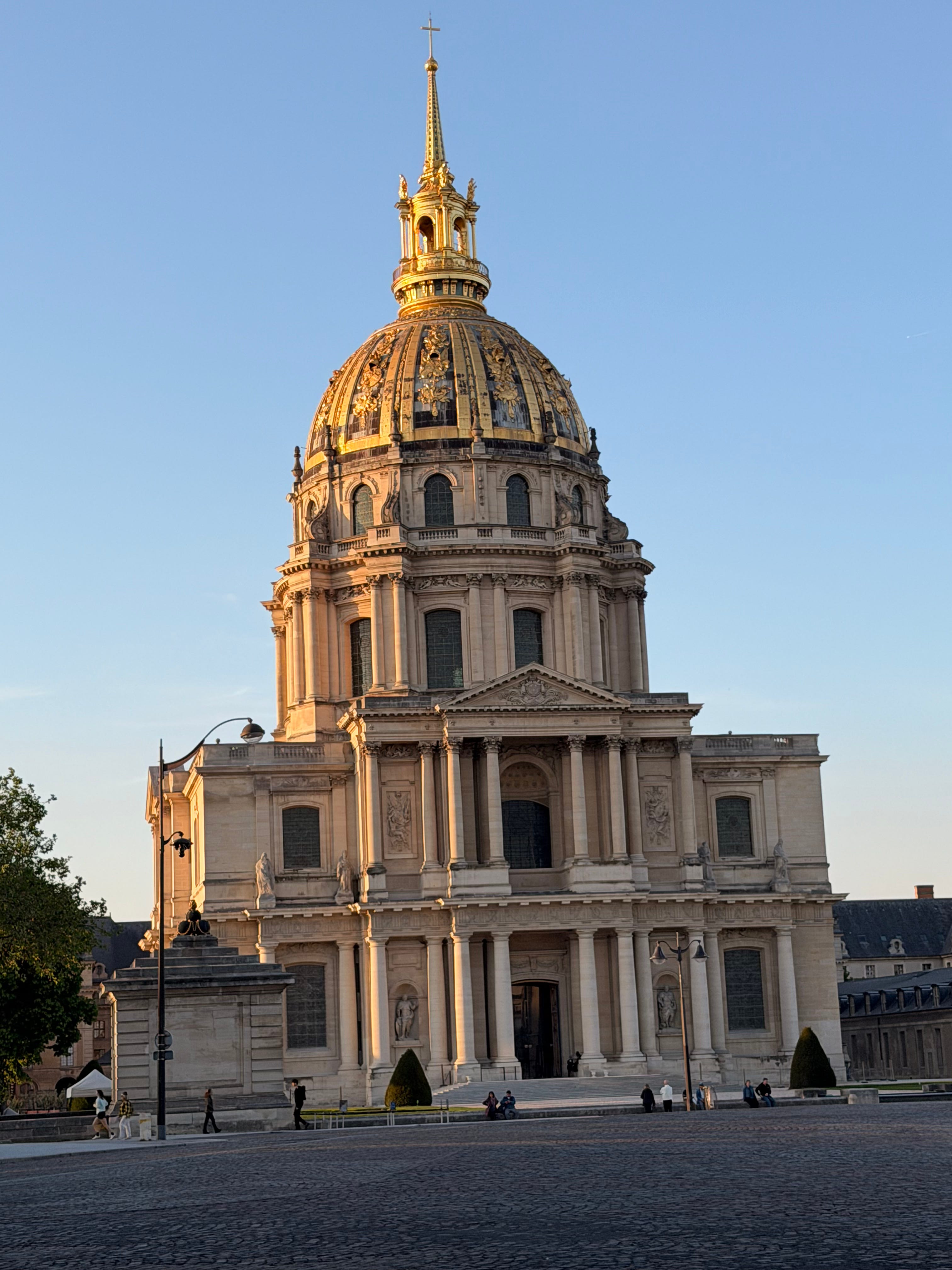
(The gold-domed Invalides in Paris, is a museum and church in the 7th arrondissement containing relics relating to the military history of France)
How does one recall a searing, vivid dream and speak properly of its powerful details and the resulting emotional impact that seems to still linger?
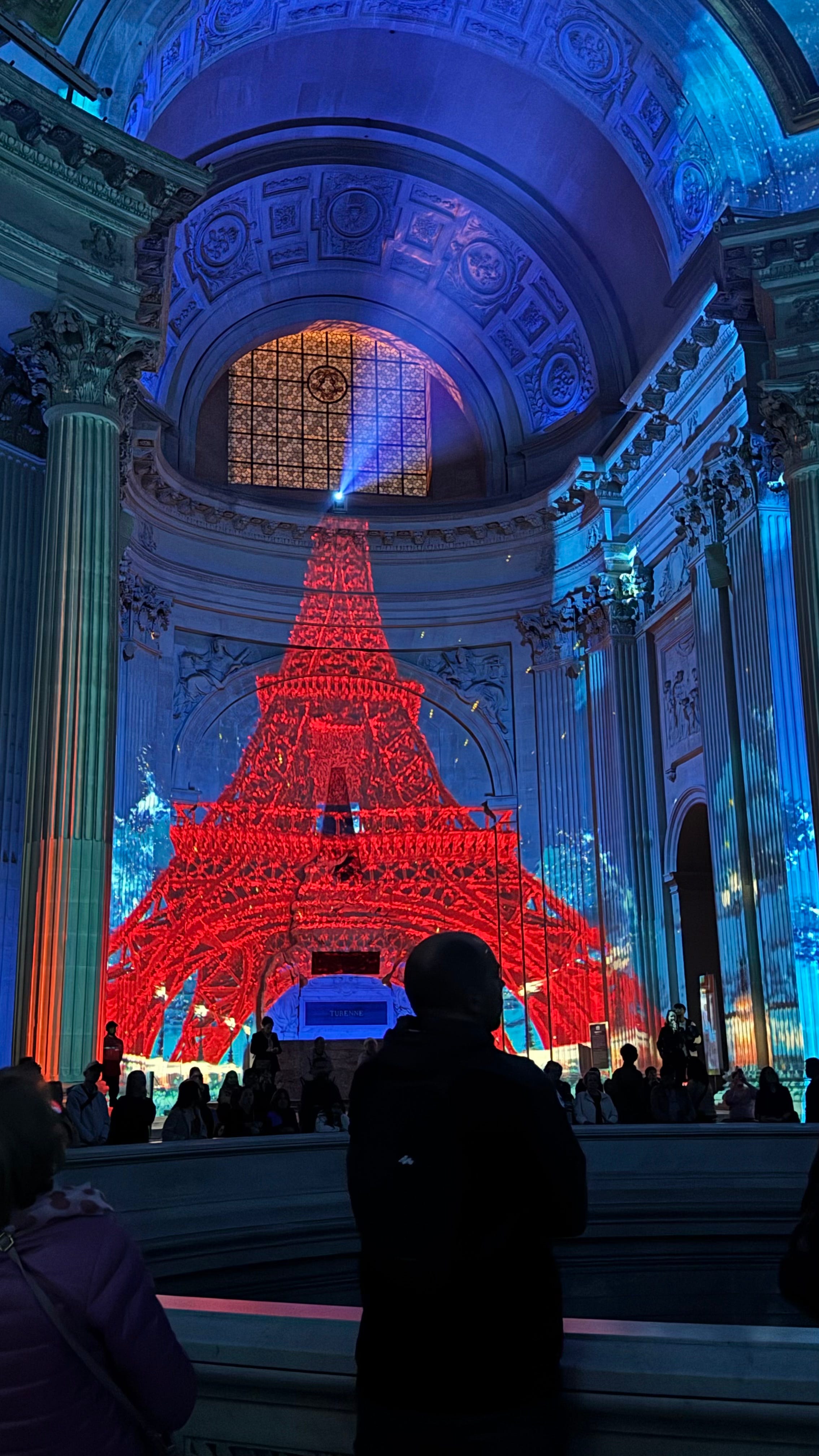
That’s the task at hand here when trying to describe my encounter with AURA INVALIDES, a momentous sound and light show ongoing now at the famous domed military monument in central Paris.
Offered to me by a dear friend as part of a daylong birthday package celebrated in Paris this spring, we arrived at the stately museum just as crowds were beginning to queue at the twilit entrance. The stately building resembles more of a cathedral or a church rather than a museum containing fearsome memorabilia from French battles.
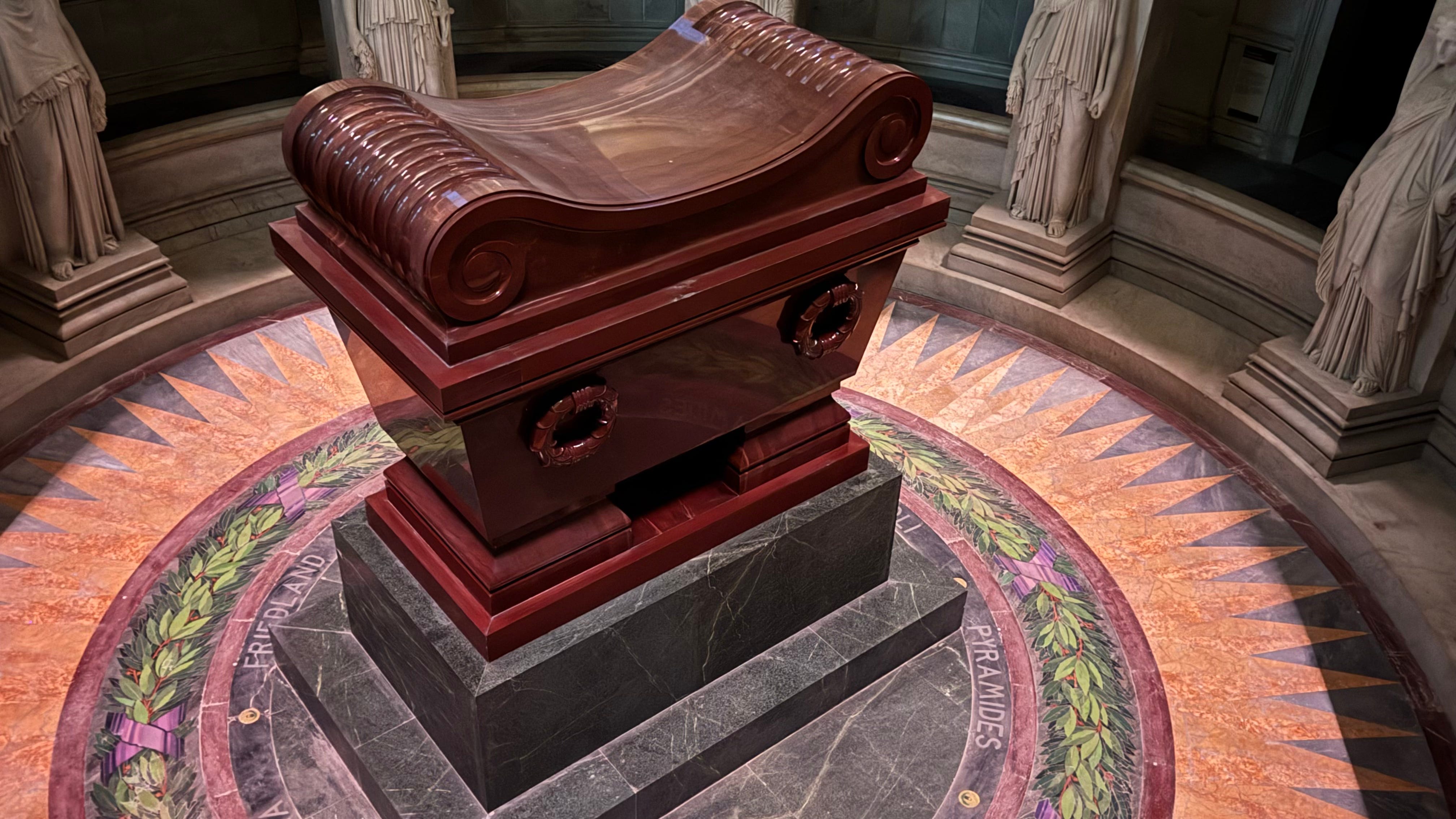
(Napolean’s momentous tomb where we observe from on high.)
As we solemnly entered the cavernous gallery, we were instructed to gather around the circumference of Napoleon’s closed tomb which is situated beneath public access, roughly 500 feet below the cool marble railings we were leaning over. Because my companion is compromised with mobility, we were offered stools to sit on as the music began to swell. Classical orchestral compositions filled the entire museum as we were boldly and brazenly swept into an immersive experience like no other.
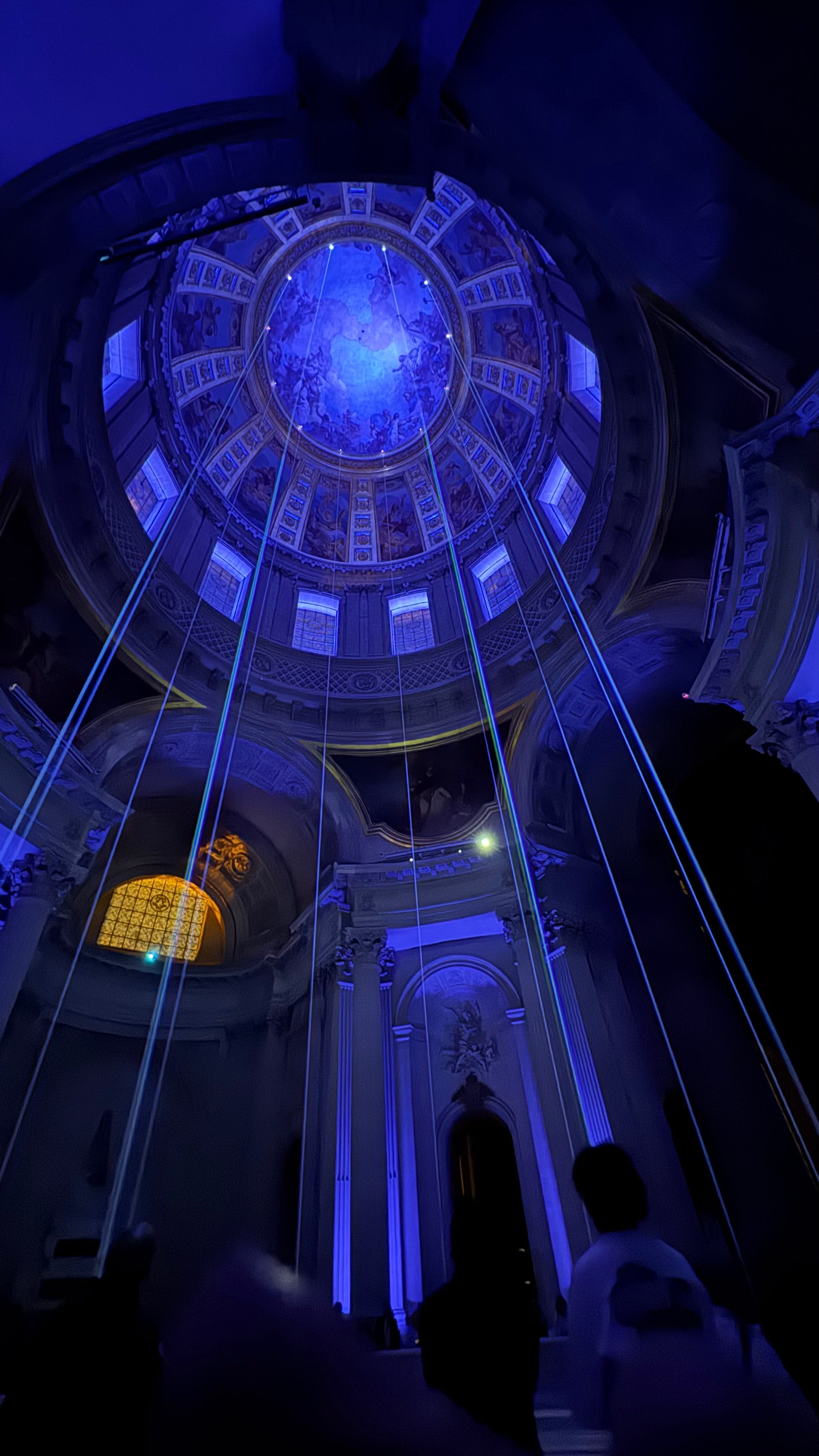
Dense colors infused the air like fog and suddenly there were animated images of the priceless paintings and sculptures held within the museum. They broke open their picture frames and scrubbed the ceilings and walls of the grand military containment with ancient oil and varnish.
Carved statues in the vestibule were receding and vanishing only to reappear as ghostly moving images that seemed to approach the spectators’ throats. The audience was hushed as a swirling gate to infinity opened from within the center of the Invalides dome and I was met with the vague sensation that our hearts had gathered together here to be taken upwards.
My companion was dazzled by the light show that intricately revealed the architectural splendor of the building in which we were seated. I however, was clutching onto my chest, in both awe and agony, as fiery images of phantom soldiers and pantomimes of violent destruction ground me to my core.


This is not an immersive sound and image show for the faint-hearted.
In fact, there is a breathtaking moment during the AURA presentation when I could imagine the iconic gold dome of the Invalides recklessly and irreparably shattered.
This is a momentous time to call out to our guardian angels for a peaceful and necessary intervention.
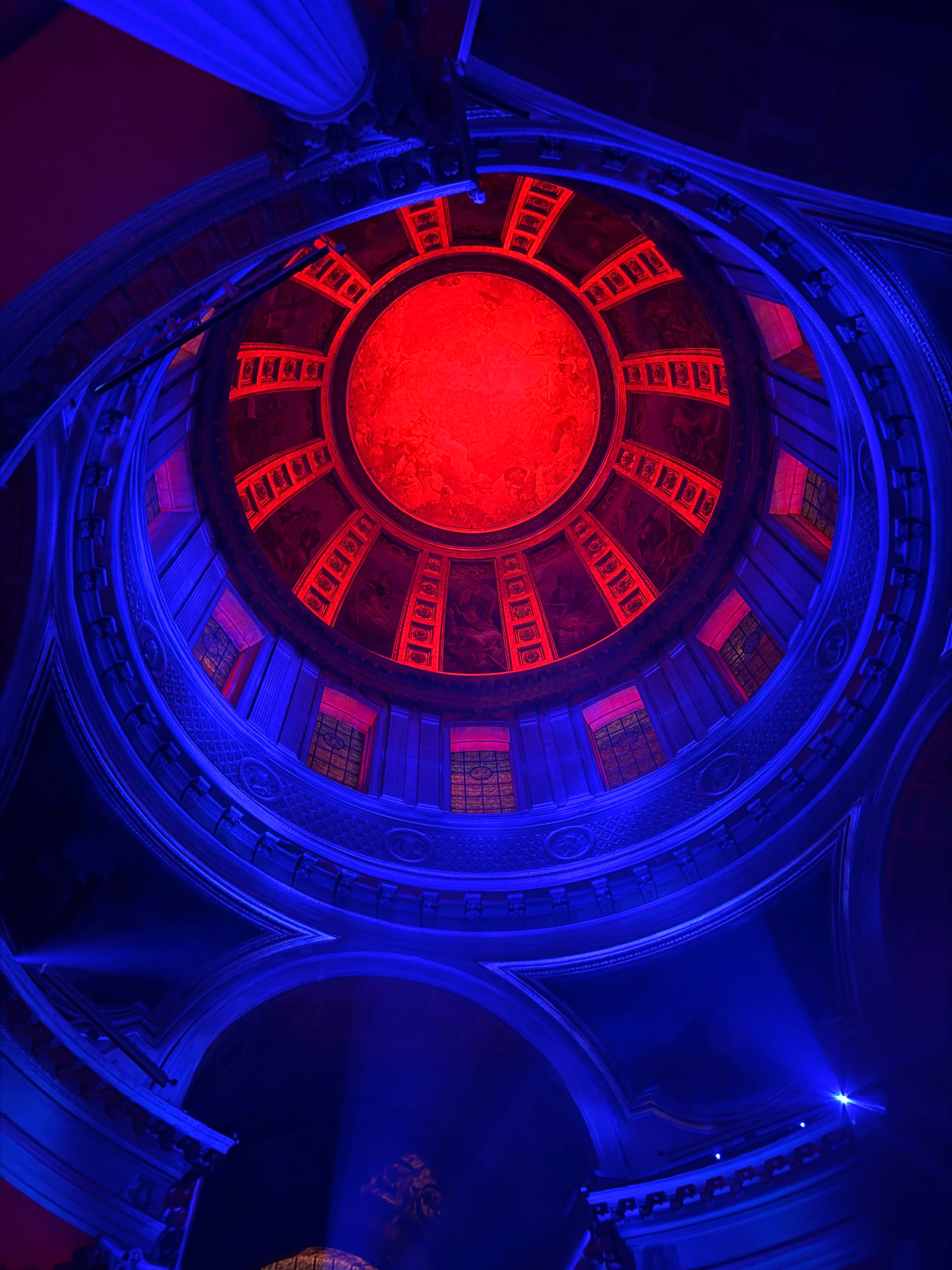
I left the experience, shaken and disheveled, recalling a Joni Mitchell song titled, the Tea Leaf Prophesy (Lay Down Your Arms), in which she repeatedly chants, “Study war no more!”
And as a chilly April evening wind blew into the cracked-open back window of my Uber as I rode back to my hotel in the 5th arrondissement, I remembered years ago in my undergraduate French poetry class that there were no registered outcries against the Napoleonic wars. The general public in the 19th century was muted and ultimately stifled.
In fact, it wasn’t until later, after those monumental battles had subsided, that a small theological society in the United States began a formal Peace Society to expand on the notion of a permanent end to all wars everywhere.
In the early 1800’s, British women gathered together in Olive Leaf Circles to rekindle the notion of civility and gentleness, and ultimately pacifism—the notion that disputes between nations can and should be settled through delicate negotiations and the intrinsic understanding that all human life is sacred and should be protected.
Bertha von Suttner, the first woman to become a Nobel Prize laureate, became a leading figure in the peace movement with the publication of her novel, Lay Down Your Arms in 1889, then later formed an Austrian pacifist organization a few years later.
I left my university teaching career in the humanities consistently bringing the Universal Declaration of Human Rights to the solid attention of my students. This peace-loving document drafted after World War II, outlines exactly how fundamental human rights are to be universally protected and adopted by all countries—affirming that all human beings are born free and equal in dignity and rights.
Many of us will travel this year to revisit famous battle zones or monuments, to pay our respects to the fallen, to light a candle somewhere for the countless lives lost to brutal and senseless wars that are still waging around the world.
I want to still believe in peace and not as mere faery dust, but as something still tangible for everyone in this world we live in.
The famous Russian writer Leo Tolstoy, author of the landmark novel, War and Peace, wrote, “In all history there is no war which was not hatched by the governments, the governments alone, independent of the interests of the people, to whom war is always pernicious even when successful.”
And to this may I add one more important quote of his, “Let us forgive each other, only then will we live in peace.”
Resources
Launched in September 2023, AURA INVALIDES is a defining moment in cultural experiences in Paris. Displayed within the core of Paris at the Dôme des Invalides, this experience has something deeply meaningful to offer everyone who attends. If you’re visiting Paris, make sure you reserve your ticket.
Read this article on Leo Tolstoy and his bold vision of forgiveness here in the Economic Times.
(All images courtesy of Gerard Wozek or in alignment with Creative Commons)
Stunning pictures.
"I want to still believe in peace and not as mere faery dust, but as something still tangible for everyone in this world we live in."
Agreed.
Gerard, these two paragraphs of yours dazzle me as much as this "experiential light show" did you:
Dense colors infused the air like fog and suddenly there were animated images of the priceless paintings and sculptures held within the museum. They broke open their picture frames and scrubbed the ceilings and walls of the grand military containment with ancient oil and varnish.
*****************
They "broke open their picture frames and scrubbed . . " - I LOVE THIS
*****************
Carved statues in the vestibule were receding and vanishing only to reappear as ghostly moving images that seemed to approach the spectators’ throats. The audience was hushed as a swirling gate to infinity opened from within the center of the Invalides dome and I was met with the vague sensation that our hearts had gathered together here to be taken upwards.
***********************
". . . that seemed to apparoach the spectators' throats. . . . a swirling gate to infitnity opened . . . the vague sensation that our hearts had gathered together here to be taken upwards."
*********************
Gorgeous!
What a spectacle!