
Combing Through the Wallace Collection
Five unmissable works of art inside London's underrated free museum.

(Central London’s unforgettable art museum, occupying Hertford House in Manchester Square, includes, according to their official Wallace Collection website, “unsurpassed masterpieces of painting, sculpture, furniture, arms and armor, and porcelain.”)
Overwhelm followed by sweat-inducing, full body panic were the first emotions that emerged within me as I walked steadily through the main entrance of The Wallace Collection.
Friends insisted I’d be better off visiting the Tate Modern instead, but there was something about the fact that this museum contained a quirky hodgepodge of rare and priceless artifacts that somewhat intrigued me.
Housed in the Hertford House, once the fine residence of the Seymour Family, this stately mansion is the number one spot in London to get within inches of the decorative arts that are kept there—the items held within are all from the 15th to the 19th centuries, with a significant collection of French 18th-century paintings, furniture, arms and armor, porcelain and Old Master paintings, arranged neatly into over twenty room-galleries.
According to the paperback museum guide sold in the bookstore, this private collection was mostly created by Richard Seymour-Conway, 4th Marquess of Hertford, who left both it and the massive house to his illegitimate son Sir Richard Wallace. Later, Wallace’s former wife, Julie Amelie Charlotte Castelnau, left the entire collection to the nation, where it still remains for the public to peruse without charge.


Let it be known, I am not a devoted fan of this heavy Baroque art—a bit of a minimalist at my core, I do sincerely appreciate the masterworks created by some of the legendary painters who are featured here. But the ornately framed oils of the upper class hung below heavy crystal chandeliers and aside silk-embossed wallpaper cannot start a flame within me.
However, and nonetheless, I’ve underscored five oil paintings, mostly all contained within the upstairs East Galleries, that left a deep impression on me. Without apology, here are my personal choices:
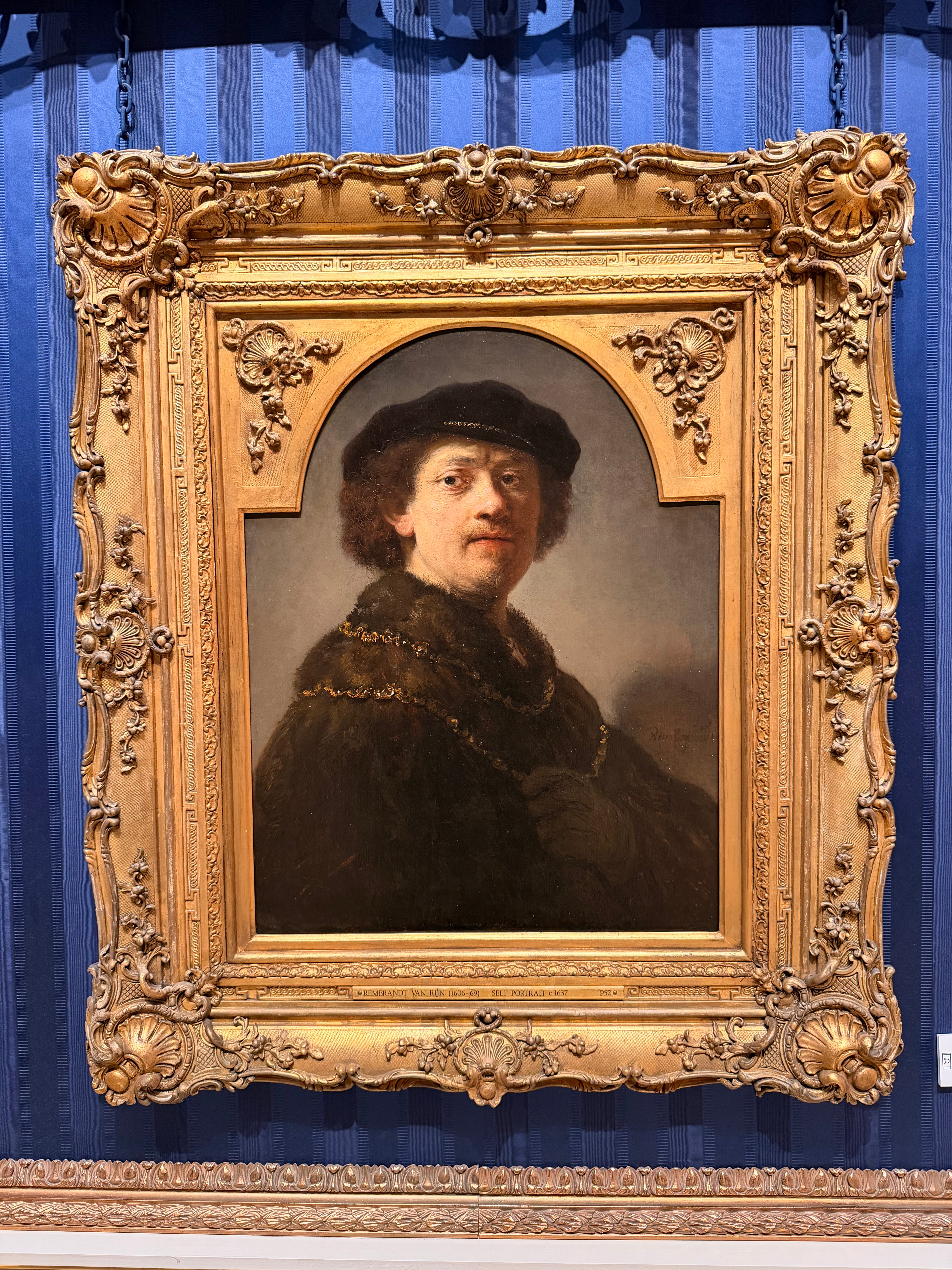
Rembrandt’s Self-Portrait (1637)
Certainly one of the most arresting works of art in the Wallace Collection belongs to the great master himself, Rembrandt. Self-Portrait or Self-Portrait in a Black Cap is one of hundreds of self-portraits produced by Rembrandt in his lifetime, painted here in 1637 to represent the great artist in his studio. The moment your eyes meet the painter’s in this Self-Portrait, you’re utterly bonded for life. All but 31 years old in this precise moment, the genius artist has three more decades to create the body of work that so captivated the world. But here we’re treated to just a glimpse of the monumental talent at his most earnest, most youthful sincerity, with all his robust, nearly uncontainable stamina, which appears here to be boundless.
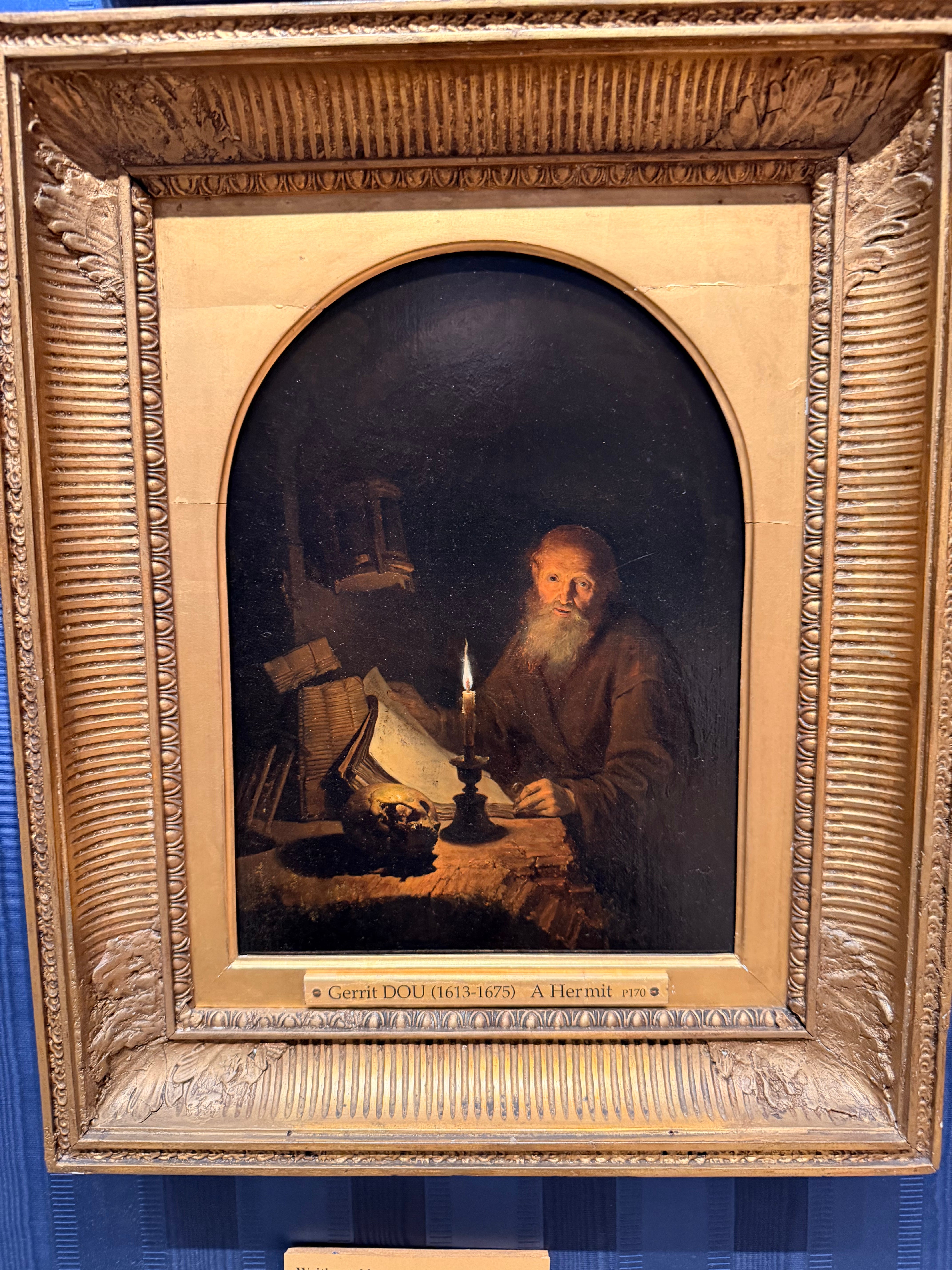
A Hermit by Gerrit Dou
This captivating oil painting captured on oak panel by Dutch Golden Age master painter Gerrit Dou, plays with light in such a way that you’re instantly drawn in with little opportunity for release. Playing with mood and traditional “deathly” symbolic choices, this is Dou’s opportunity to reveal his representation of Vanitas__a genre of painting that began in the 16th century, symbolizing the precariousness of life, the impermanence of pleasure, and thus the meaninglessness of ego-driven pursuits. Popular with Dutch painters during the Baroque period (c.1585–1730), this style evokes “memento-mori”—a trope using common symbols that reflect on the ephemeral—thus here in Dou’s compelling work, we find a corroded human skull, a shadowy hour glass, and a quickly burning candle taper.
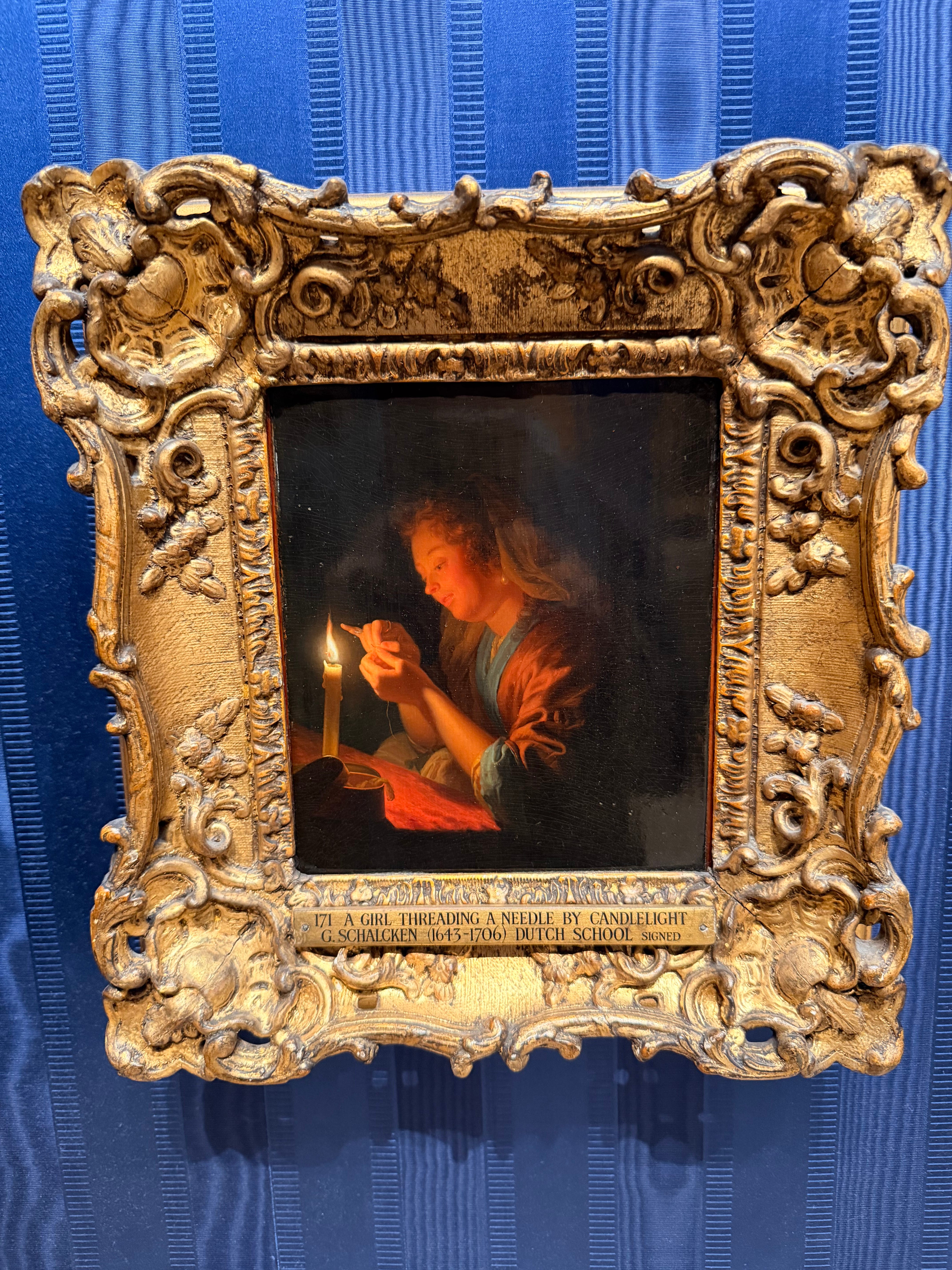
A Girl Threading A Needle By Candlelight by Gottfried Schacken
As you can tell by now, I have quite a thing for the Dutch masters. I find their dark, brooding nocturnes like this one quite absorbing. This is a characteristic candle-lit scene demonstrating Schalcken’s exceptional talent as a painter of nightfall. A young, seated woman is shown threading a needle in front of a burning wick. Schalcken completed his training with Gerrit Dou, the foremost fine arts Dutch painter. In fact, of special note, this particular subject and composition derive from a painting initially attempted by Dou himself. What draws me in ultimately is the youthful exuberance of then woman and her devoted commitment to the tedious task at hand, despite the hardships presented by the presence of late evening.
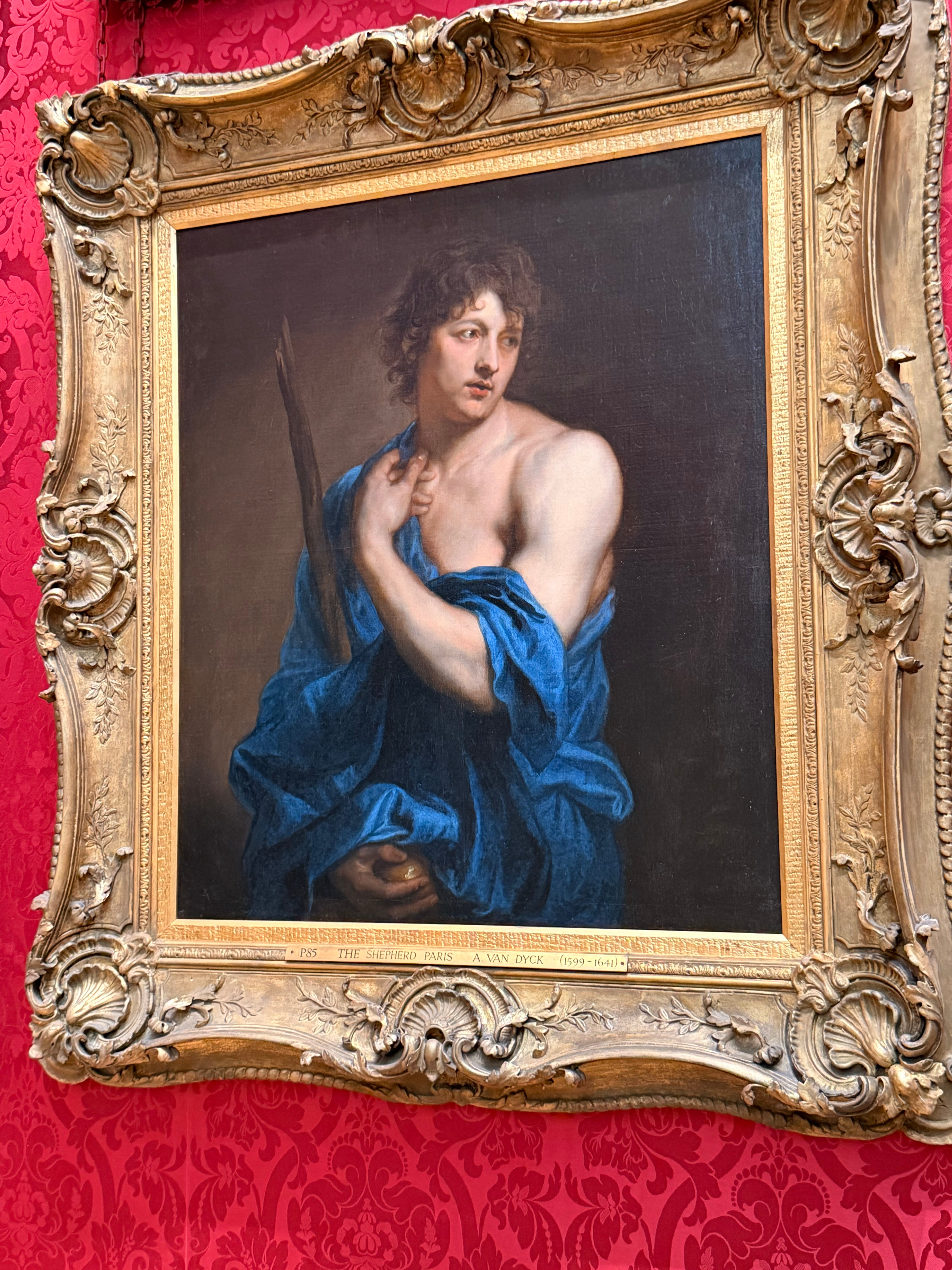
The Shepherd Paris by Anthony Van Dyck
The Shepherd Paris is a 1628 painting by the Flemish artist Anthony van Dyck, depicting the legendary myth of Paris during the Judgement of Paris. Paris is certainly one to take a lengthy gaze at with his gentle hands and withdrawn eyes. The stealthy youth has been ordered by Jupiter to give the golden apple to only one of the three most beautiful goddesses: Minerva, Juno, or Venus. Who will he choose? But then, where are these beautiful women to be found in the painting? Van Dyck chose to exclude the trio in order to focus instead on Paris alone, and the challenging nature of what is required when making an impossible decision.
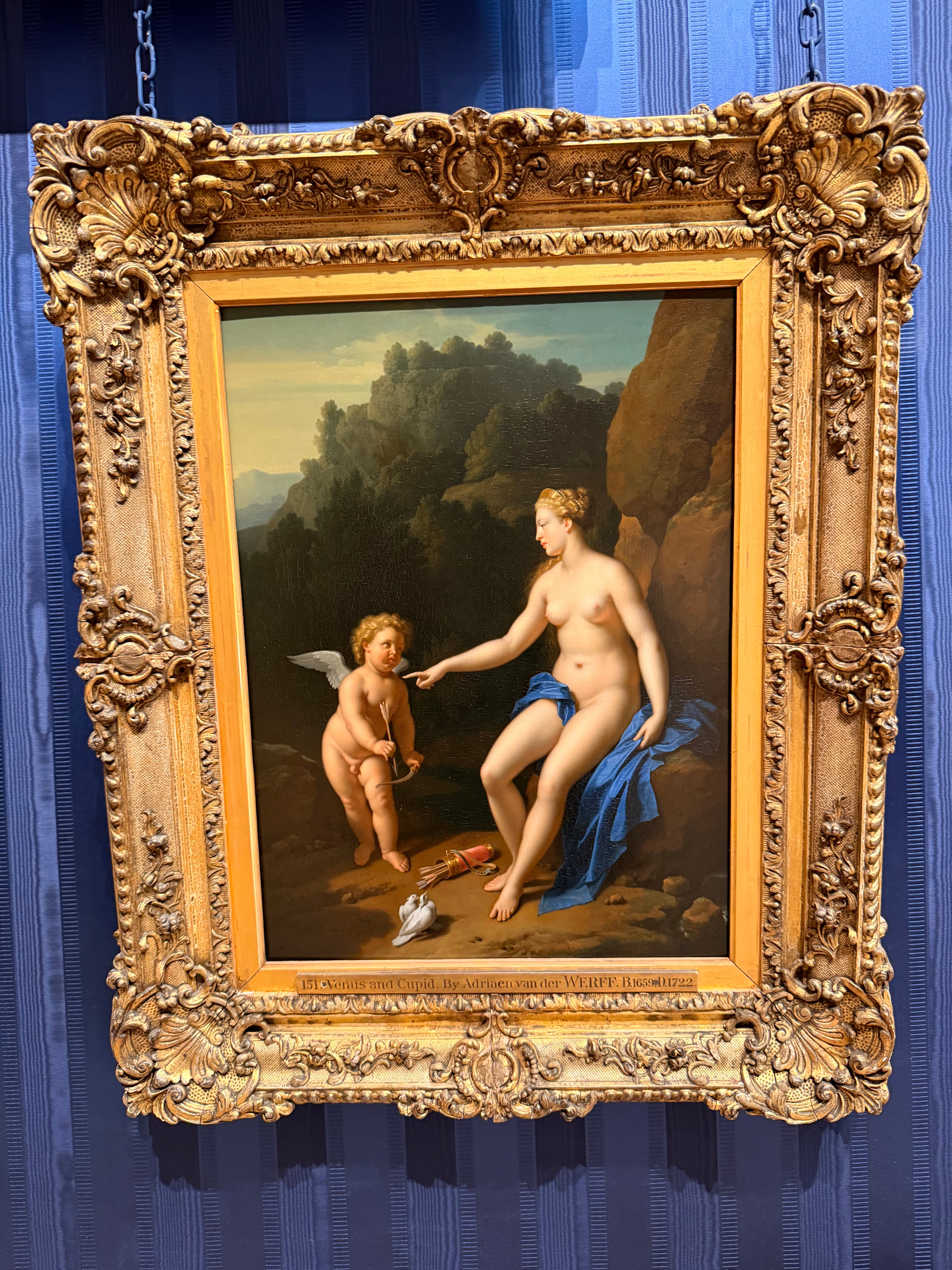
Venus and Cupid by Adriaen van der Werff
And finally, why not end with one of the most potent forces in the world: the mesmerizing mythology of romantic love. Venus is begging Cupid not to fire his arrows thoughtlessly, and holds out her hand in protest to emphasize that love can be reckless and wanton if not given the proper consideration. While the goddess appears cautious and apprehensive of the headstrong Cupid, I’m also reminded here of Roman poet Ovid’s famous quote: “Venus favors the bold!”


Resources
Plan your visit to this essential, eclectic collection and discover just how ready you are for the world of art! All the galleries are free except the ones containing special exhibits
(All photos by Gerard Wozek or in alignment with Creative Commons)
Hi Gerry,
Wow! I love this piece on a museum I'd never heard of. The artworks you focused on are all amazing. I love them all. Rembrandt -- well he's Rembrandt. Great self-portrait. My favorite of the five is the girl threading the needle by candlelight. I am mesmerized by the contrast between light and dark, and the fabric is so incredibly beautiful. I also love the expression on her face.
And I can't help but get flashbacks to when you and I were at the Art Institute taking in so many masterpieces and discussing and admiring them.
Thank you for sharing this wonderfully written piece on some wonderful art that contains feasts for the eyes.
Thanks for writing about the Wallace Collection, Gerard. It is in my list of places to visit in London. Your piece will be handy when I eventually get to see it. My interest comes from the Velazquez’s the Lady with a Fan. Did you see it or was it not on display?